
Contemporary fence design: How to make your fence feel like part of the home
Posted:
Edited:
June 29, 2026
July 3, 2026
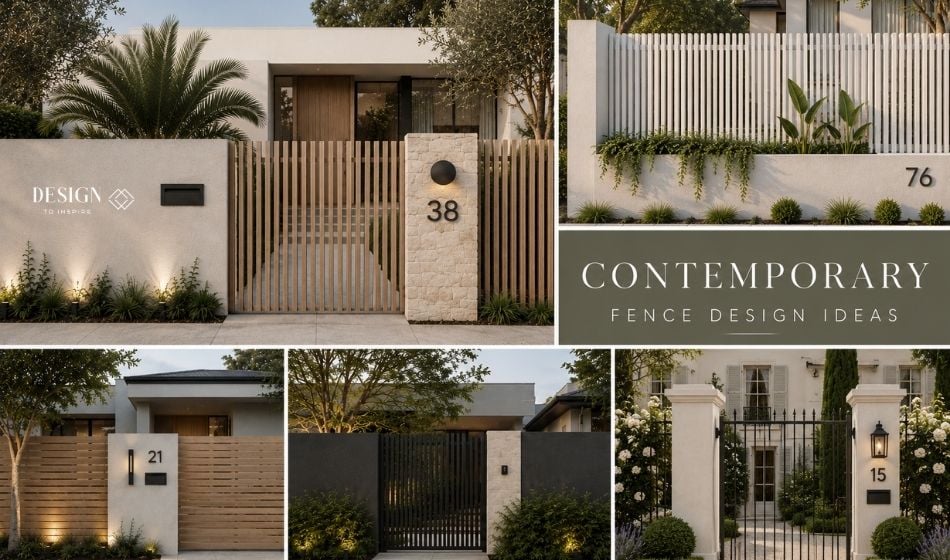
A lot of people think about the fence last. The house gets renovated, the landscaping goes in, and the driveway gets redone. Then right near the end, someone says, “Ohh… we should probably organise the fence.”
And to be honest… You can always tell when the fence is an afterthought. It ends up feeling separate from the home instead of connected to it. The colours don’t quite match. The materials stop and start. Sometimes the house itself is beautiful, but the front boundary pulls your eye straight to the wrong place.
The homes that feel the most complete from the street almost always have one thing in common: everything works together. The fencing, facade, landscaping and entry all feel like part of the same story.
That’s really what contemporary fence design is about. Not necessarily making the fence the feature or spending a fortune on lavish features. It’s about making the entire exterior feel like one planned project.
Here’s how I approach contemporary fence design, the materials I love using, and the mistakes I see most often.
What is a contemporary fence design?
People often put “modern” and “contemporary” in the same category, and sure, there’s a definite crossover. But when I think about contemporary fence design, I’m usually thinking less about trends and more about how the fence sits alongside the home itself.
A contemporary fence should feel clean, simple and connected to the architecture. There’s less decorative detail, and the materials feel intentional rather than added in afterwards.
One of the biggest mistakes I see is introducing a completely different material or colour at the front boundary that doesn’t appear anywhere else on the property.
A stone feature with no stone on the home. Timber fencing against a facade that has no warmth anywhere else. A black aluminium fence sitting in front of a soft coastal-style home, where nothing else is dark.
You might not consciously notice why it feels off, but you feel it. The homes that feel expensive and well-designed usually repeat elements across the exterior. A colour reappears. A texture carries through. The fence feels connected to the facade instead of competing with it, and that’s the difference.
Fences that make homes look expensive
Contemporary fence design should feel effortless and practical. Creating a “premium” looking front yard isn’t actually as expensive as you think. And if you’re after resale value, connecting the home and the fence design-wise could boost a buyer’s first impression.
Some simple changes that feel high-end:
- The same render colour carried onto the fence piers
- Timber repeated across the front door and gate
- A roof colour echoed in the fencing
- Stone detail reappearing in small moments across the exterior
- Landscaping that softens both the home and the fence together
When every element is trying to be the hero, the exterior starts feeling visually cluttered. But when materials repeat naturally, the whole property settles.
That’s often what people are responding to when they say a home feels “architectural” or “high-end”. It’s not necessarily expensive materials. It’s consistency.
Contemporary fence materials I love to use
You might be surprised to know that your material choice often matters more than your fence style. The right material, used well and proportioned properly, will almost always feel more timeless than a trend-driven design.
Powder-coated aluminium or steel slats
This is probably the material I specify most often for modern fence designs. It’s clean, durable, and low-maintenance, which will be a priority in a few years.
Deep charcoals, warm greys and softer monument tones work beautifully in many Sydney homes because they sit back visually rather than shouting for attention.
I’ll often recommend aluminium timber-look slats for clients who love warmth but know they realistically don’t want the upkeep of hardwood.
Rendered fencing
A rendered fence can completely transform how substantial and connected a home feels from the street, especially when the same render colour carries through from the facade.
When the proportions are right, the entire frontage can feel more architectural and grounded. The key, however, is restraint. Don’t get too optimistic and overdo it. Heavily rendered walls, combined with too many feature materials, can start to feel harsh very quickly.
Hardwood timber slats
Timber is timeless, and brings a softness and warmth that other materials can’t quite replicate. I particularly love timber fences paired with layered planting because it stops the frontage from feeling too hard or overly polished.
Spotted gum and blackbutt tend to work beautifully in contemporary fence design because they have enough variation and texture without feeling too orange or dated.
The maintenance side does matter here, though. A timber fence can be a commitment. Some clients are happy to oil timber every few years because they genuinely love the look. Others know they won’t keep up with it, and that’s usually when I guide them towards timber-look alternatives instead.
Stone features
Stone can work beautifully when it feels connected to the architecture of the home. But… this is also where I see some of the most expensive-looking mistakes.
A chunky stacker stone feature on a skinny column almost always feels out of proportion. And if the stone doesn’t appear anywhere else on the property, it can end up looking stuck on rather than integrated. One good stone detail used properly will always look better than several smaller ones fighting for attention. If you are using stone, it’s best to chat with an exterior home designer first to ensure you make the most of your budget.
Mixing different materials together
There’s no rule in contemporary fence design that it has to be a single material. In fact, some of my favourite fences combine two materials rather than relying on one.
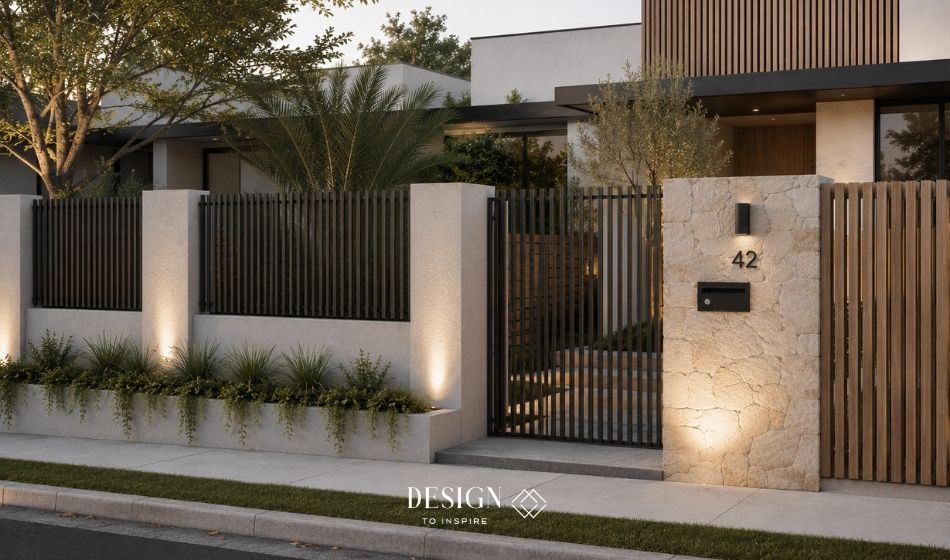
Rendered piers with aluminium slats. Timber against stone. A rendered base with softer screening above. The key, of course, is knowing when to stop.
Usually, two materials are enough. Three at most. Once every element starts trying to stand out individually, the exterior loses the premium look that contemporary homes do so well.
Modern gate and fence design
One of the easiest ways to make a fence feel disjointed is to treat the gate like an add-on or afterthought.
Your gate should feel like part of the same design language as the fence and the rest of the exterior. Same proportions. Same material palette. Same overall feeling.
If you’re adding an electronic gate to the driveway, you’ll need to consider how it opens. Sliding gates need enough room to fully retract without interfering with pedestrian access. Swing gates need clearance on sloping driveways. Lighting should be planned early rather than added awkwardly later.
These practical details are usually invisible when they’re done well, which is exactly the point. If your home is set back from the street, lighting around the gate, driveway, and entry can completely change how welcoming the home feels at night.
Modern fence ideas on a budget
Not every contemporary fence design needs to be custom stonework or rendered masonry. Some of the nicest fences I’ve seen are actually very simple. Good proportions, consistent materials and restraint usually matter more than expensive features.
If the budget is tighter, try looking at:
- A simple aluminium slat fence done properly
- Clean horizontal timber with thoughtful landscaping
- Basic rendered piers with good lighting
- Fewer materials, but used consistently
This is much better than trying to imitate a luxury look with shortcuts everywhere.
There are also certain areas where I’d almost never recommend cutting corners. Poor-quality posts, badly detailed corners and cheap stone installation techniques tend to date very quickly. People notice those details more than they realise… and it’s not a great first impression.
If something needs to be heavily compromised to make it fit the budget, it’s often better to simplify the design instead. Simple and well-constructed will always age better than overdesigned and half-finished.
The most common fence mistakes I see
After years of design consultations, there are a few things I notice almost immediately when a fence doesn’t feel quite right.
A fence competing with the front entry
You should instinctively know where to look when approaching a home. If the front fence design is louder than the front door, the balance is usually off.
Too many materials
Stone, timber, render, cladding, feature screens, multiple colours. Once everything becomes a feature, nothing actually stands out.
Wrong proportions
This happens constantly with stonework and oversized columns. Scale matters far more than people realise.
Materials with no relationship to the home
A fence should support the architecture, not ignore it. The best fences always borrow something from the home itself.
Treating landscaping as optional
Even beautiful fencing can feel hard without planting around it. Landscaping softens the transition between the street and the home.
A contemporary fence should feel like it belongs to the home
The best fences usually aren’t the ones trying hardest to stand out. They’re the ones that feel connected to everything around them. And quite often, that’s what makes a home feel more expensive from the street.
Every home is different, though. The right fence for a contemporary coastal home will look very different to the right fence for a darker architectural build or a more traditional property being updated over time.
That’s why it helps to look at the exterior as a whole rather than choosing the fence separately at the very end.
If you’re planning a new fence, renovating your facade or trying to pull the front of your home together, take a look at my exterior design services or get in touch to talk through your project.
Frequently asked questions on fence design
Technically, “modern” is a specific design movement from the mid-twentieth century, while “contemporary” just means current. In real life, most people use the words to mean the same thing. For fence design, both usually point to clean lines, simple materials and minimal decorative detail.
Most local councils in Sydney allow front fences up to 1.2m to 1.8m depending on the area and the home’s setback, with stricter rules in some heritage zones. Always check your council’s rules before you commit to a height – they vary more than people realise.
Powder-coated aluminium slats or treated pine slats with rendered piers tend to be the most affordable ways to land a contemporary look. Both can look designed without spending big, as long as the proportions and colour are right.
They should at least feel related. The gate is part of the fence, not a separate thing, so the materials, finish and height all need to work together. A small contrast can work as a feature, but the gate shouldn’t look like a different decision.
It depends on the materials, the scope and the level of detail. Powder-coated aluminium slats can come in well under a rendered-and-stone fence. The real win with a contemporary fence design usually isn’t the build cost – it’s the cost of avoiding a fence that doesn’t suit the home and needs to come out a few years later.

Nancy Malekpour-Nisyrios
An award-winning interior designer, Nancy Malekpour-Nisyrios is the Founder and Lead Design Consultant at Design to Inspire. Formerly a senior interior designer for a leading NSW construction company, she’s completed over 100 display homes, winning multiple MBA Excellence in Housing and Housing Industry Association awards.

Meet The Designer
An award-winning interior designer, Nancy Malekpour-Nisyrios is the Founder and Lead Design Consultant at Design to Inspire. Formerly a senior interior designer for a leading NSW construction company, she’s completed over 100 display homes, winning multiple MBA Excellence in Housing and Housing Industry Association awards.