
Your Guide to Modern Master Bedroom Wardrobe Design
Posted:
Edited:
July 16, 2025
October 13, 2026
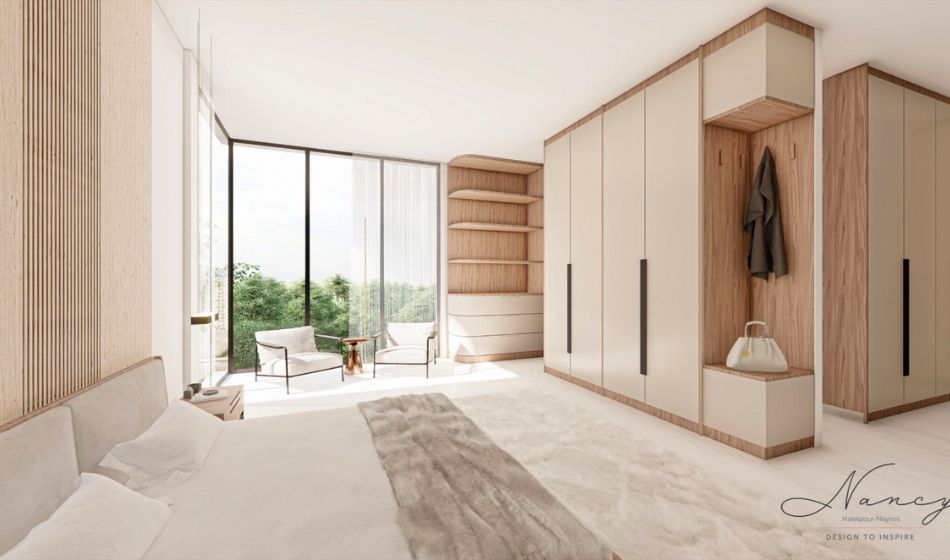
A wardrobe is one of the few pieces of a home that you touch every single day, yet it is often the last thing properly designed. Builders tend to drop in a standard wardrobe because it fits the space on the plan, not because it fits how you actually get dressed in the morning. After almost twenty years of working on Sydney homes, I can tell you that wardrobe design is one of the most undervalued parts of a renovation or new build, and one of the easiest places to either waste money or save it.
I am Nancy Malekpour-Nisyrios, founder and lead design consultant at Design to Inspire, a boutique interior design studio based in Sydney. This guide walks through everything I cover with clients when we design a master bedroom wardrobe, from layout and materials through to what a built-in wardrobe actually costs, so that by the end you will know exactly what to ask an interior designer and what is genuinely possible for your space and budget.
Start With the Room, Not the Wardrobe
Before any bedroom wardrobe design decision gets made, I always look at the whole room. Where the bed sits, where the windows are, and how you move through the space all affect what wardrobe layout will actually work. A beautiful walk-in wardrobe design that blocks the morning light or forces an awkward path to the ensuite is not good, no matter how well finished the joinery is.
This is the same thinking behind my space planning service, reviewing the floor plan and furniture layout together before any joinery is drawn up, so the wardrobe works with the room rather than against it.
What Is the Best Type of Wardrobe for a Master Bedroom?
There is no single best wardrobe design for a bedroom. The right choice depends on the size of the room, your budget, and how you actually store and access your clothes. At a high level, master bedrooms suit one of three approaches.
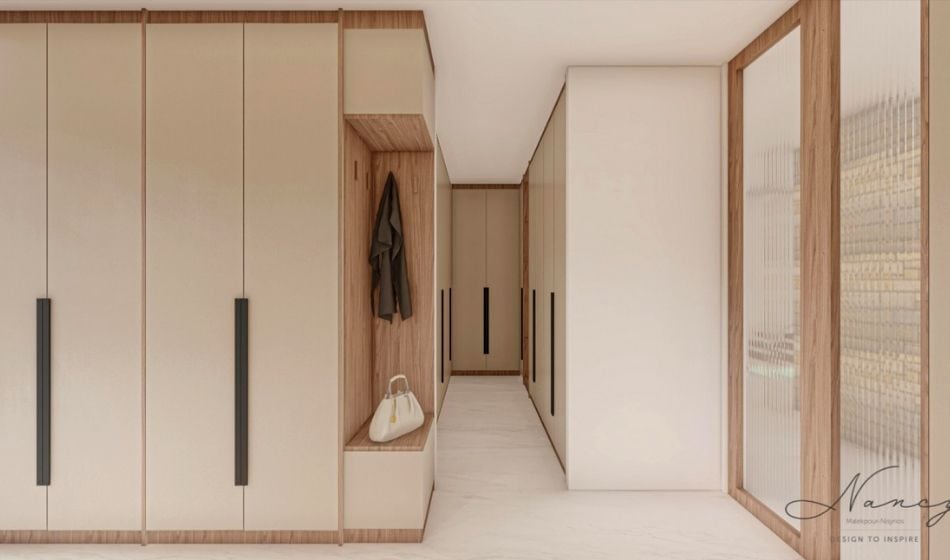
A built-in wardrobe runs along a wall of the bedroom itself and is the most space-efficient option, which makes it well suited to standard Sydney bedroom sizes.
A walk-in wardrobe is a separate dressing space, usually requiring a few square metres carved out of the bedroom or an adjoining area, and tends to suit larger or newer master suites.
A freestanding wardrobe is the least permanent option and can work well in a rental or a room where the layout may change in future, though it rarely uses space as efficiently as built-in joinery.
How to Design a Wardrobe Layout
Getting the layout right is less about style and more about making sure every part of the wardrobe is sized for what actually goes into it. According to Houzz Australia’s guide to wardrobe measurements, overall wardrobe depth including doors typically sits between 600 and 650 millimetres, with shelving and drawers usually around 450 millimetres deep. Hanging rails are generally set at about 940 millimetres for short garments such as shirts and jackets, and around 1880 millimetres for long garments like dresses and coats, with a good rule of thumb being that at least a quarter of your hanging space should be allocated to longer items. Shoe shelving typically sits between 220 and 260 millimetres high, roughly double that for boots.
These measurements matter because an off-the-shelf wardrobe is built to generic dimensions, not to your actual wardrobe of clothes. When I design a layout, I work through how many short hanging items, long hanging items, folded items, shoes, boots and accessories a client actually owns, then size each section of the wardrobe around that, rather than guessing.
How Much Does It Cost to Build a Built-In Wardrobe?
This is one of the first questions almost every client asks me, and the honest answer is that cost depends heavily on size, materials, and the complexity of the fit-out, including features such as internal lighting, soft-close drawers, or custom joinery around an awkward wall or window.
What matters more than any single figure is how the fee is structured. The Design Institute of Australia articulate that residential designers generally charge by the hour, as a fixed project fee, or as a percentage of the total project cost, and the same principle applies to wardrobe design and joinery. A fixed fee agreed before work begins gives you cost certainty, which is why I often use this model for wardrobe and bedroom projects.
Is It Cheaper to Build or Buy a Wardrobe?
A flat-pack or freestanding wardrobe will almost always have a lower upfront price than a custom built-in. But cheaper to buy is not always cheaper over time. A generic wardrobe rarely uses the full height or depth of a room properly, and it cannot be built around an awkward corner, a low window, or an existing door swing, which means you often end up with wasted space you are still paying to heat, cool, and maintain.
This is where proper design pays for itself. Houzz Australia’s renovation trends research found that 94 per cent of Australian homeowners engaged a professional for their renovation project, and for good reason. The homeowners who skip proper planning are usually the ones who end up paying twice, once for the wardrobe that does not fit their needs, and again to fix or replace it a few years later. Getting the layout, storage allocation, and finishes right the first time is almost always the cheaper path over the life of the wardrobe, even if the upfront quote is higher than a flat-pack alternative.
Create seamless storage
Modern master bedroom wardrobe design is about simplicity. Wardrobes shouldn’t dominate the space; they should blend in with the room’s colour palette and make daily life easier.
In Sydney’s heritage suburbs like Paddington or Balmain, I often recommend shaker-style doors or classic panel details to tie in with existing architecture. In more coastal or modern builds, like in Bondi or Coogee, handleless doors, oak tones, and subtle textures can keep the space feeling fresh and airy.
It’s also worth thinking vertically. Including high shelves or overhead cabinets is a smart way to store seasonal items, suitcases, or spare bedding, keeping everyday areas clutter-free. Maximising the height of your wardrobe means you can make the most of every centimetre, especially if you have high ceilings.
If you’re choosing finishes and materials right now, you might like to explore our interior colours and materials guide for more inspiration.
What Are the Downsides of Having Built-In Wardrobes?
Built-in wardrobes are not the right answer for every bedroom, and a good designer should tell you this rather than push the most expensive option regardless of fit. A built-in wardrobe is fixed to the room, so it cannot move with you if you change the layout later or relocate. It is also a bigger upfront investment than a freestanding piece, and if it is designed around your current wardrobe of clothes without any flexibility, it can feel restrictive if your storage needs change significantly down the track. This is why I always build some adjustability into shelving and hanging space wherever the budget allows, rather than fixing every dimension permanently.
Built-In Wardrobe Designs for Small Bedrooms
Small bedrooms are where thoughtful wardrobe design earns their keep. A few approaches I return to again and again on small Sydney bedrooms:
Floor-to-ceiling joinery makes use of height that is otherwise wasted above a standard wardrobe, and sliding doors avoid the swing clearance a hinged door needs, which can free up valuable floor space in a tight room.
Mirrored doors do double duty, acting as a dressing mirror while also bouncing light around a smaller room and making it feel significantly larger.
Built-in lighting, particularly LED strips along shelving or inside hanging sections, makes a small wardrobe far easier to use and reads as a considered design choice rather than an afterthought.
Unique and Current Wardrobe Design Trends
Master bedroom design in Sydney has shifted noticeably over the past few years, and wardrobes are no exception. Clients are increasingly asking for open shelving sections mixed with closed storage, rather than wardrobes that hide all their clothing and shoes behind doors. Warm timber tones and textured finishes are replacing the flat white melamine that dominated wardrobe design for the previous decade, and integrated lighting has moved from a luxury add-on to something most clients expect as standard.
I have written separately about how lighting choices shape a bedroom and how colours, materials, and finishes work together across a home, both of which apply directly to wardrobe design as much as the rest of the room. When it comes to designing a calm, functional, and beautiful master bedroom.
Why a Boutique Interior Designer Changes the Outcome
A wardrobe is not just storage. It affects how a bedroom feels the moment you walk in, how easily you get ready each morning, and how well the room functions for several years to come. Working with a boutique designer rather than a volume joinery supplier means every measurement, material, and layout decision is made specifically for your room and your habits, not selected from a generic catalogue.
This is also where the idea that interior design is unaffordable tends to fall apart. The real cost of skipping proper design is rarely visible upfront. It shows up later, in wardrobes that do not fit the space properly, storage that goes unused because it was never sized for what you actually own, or joinery that has to be partially redone once the original layout proves impractical. Designing a wardrobe properly before anything is built is almost always the more affordable path once you account for the full life of the piece, not just the initial quote. You can read more about how I approach this across projects in my guide to finding an affordable interior designer in Sydney.
What to Ask an Interior Designer About Your Wardrobe
Before you brief a designer or a joiner, it helps to know what questions actually get you a wardrobe that works. Ask how they will measure and allocate space for your specific wardrobe of clothes, rather than working to standard proportions. Ask whether the quote is a fixed fee or hourly, and what is included, such as lighting design, hardware, and installation. Ask what happens if the room has an awkward feature, like a low window or an angled ceiling, and how that will be handled in the design. And ask to see how they have solved similar problems in past projects, not just finished photos but the reasoning behind the layout.
If you are planning a master bedroom wardrobe anywhere across Sydney and want a design partner who will take the time to get these details right, I would love to talk it through. You can find out more about my interior design services across Sydney, explore interior design support for an existing project, or get in touch to book a discovery call.
Frequently Asked Questions
How much does it cost to build a built-in wardrobe?
Cost depends on the size of the wardrobe, the materials chosen, and extras such as integrated lighting or soft-close hardware. Rather than focusing on a single figure, ask whether your designer works on a fixed fee or hourly basis, as recommended by the Design Institute of Australia, so you have cost certainty before work begins.
How do I design a wardrobe layout?
Start by measuring how much short hanging, long hanging, folded storage, and shoe storage you actually need, rather than copying a generic layout. Standard depths of around 600 to 650 millimetres and hanging rail heights of roughly 940 millimetres for short garments and 1880 millimetres for long garments are a useful starting point, but the layout should ultimately be built around your own wardrobe, not an average one.
Is it cheaper to build or buy a wardrobe?
Buying a flat-pack or freestanding wardrobe usually costs less upfront, but a custom built-in wardrobe makes full use of your room’s height, depth, and awkward corners, which a generic unit cannot. Over the life of the wardrobe, proper design is often the more cost-effective choice, since it avoids wasted space and the cost of redoing a layout that was never right for your needs.
What is the best type of wardrobe for a master bedroom?
There is no universal best option. A built-in wardrobe suits most standard Sydney bedrooms because it uses space efficiently. A walk-in wardrobe suits larger master suites with room to spare. A freestanding wardrobe suits a room where flexibility matters more than maximising storage. The right choice depends on your room and your lifestyle.
What are the downsides of built-in wardrobes?
Built-in wardrobes are fixed to the room, so they cannot be moved if your layout changes later, and they require a larger upfront investment than a freestanding piece. Building some flexibility into shelving and hanging sections during the design stage helps reduce this downside without giving up the benefits of custom joinery.
If you’d like some help pulling your master bedroom together, from smart wardrobe planning to full interior layouts, I’d be more than happy to chat.
Choose from a one-hour layout and lighting review or full design support. Get in touch today and let’s create a bedroom that feels as good to live in as it looks.

Nancy Malekpour-Nisyrios
An award-winning interior designer, Nancy Malekpour-Nisyrios is the Founder and Lead Design Consultant at Design to Inspire. Formerly a senior interior designer for a leading NSW construction company, she’s completed over 100 display homes, winning multiple MBA Excellence in Housing and Housing Industry Association awards.

Meet The Designer
An award-winning interior designer, Nancy Malekpour-Nisyrios is the Founder and Lead Design Consultant at Design to Inspire. Formerly a senior interior designer for a leading NSW construction company, she’s completed over 100 display homes, winning multiple MBA Excellence in Housing and Housing Industry Association awards.