
Why you need a floor plan review service before your DA is approved
Posted:
Edited:
April 22, 2026
April 22, 2026
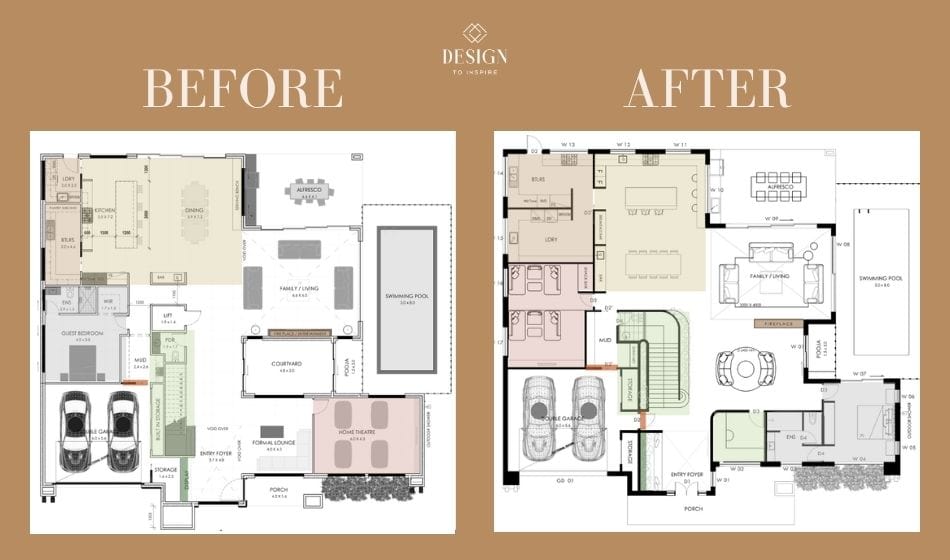
Getting your builder’s floor plan is one of those moments that feels both exciting and surprisingly overwhelming. This is it – the shape of your future home, right there on the page.
But if something doesn’t feel quite right when you look at it, or you’re not sure whether it will actually work for how your family lives, that feeling is worth paying attention to.
I’ve reviewed hundreds of floor plans across Sydney over nearly two decades, and the most common thing I hear from clients is: I didn’t know you could change any of this. Well, you can, and that’s exactly what a floor plan review service is there for. The best time to do it is right now, before your DA or CDC is approved.
What a builder’s floor plan is – and isn’t – designed to do
Builders and architects are doing an important job. They’re working to a brief focused on structure, compliance and cost. What they’re generally not thinking about is where your furniture will go, how your family moves through the kitchen on a school morning, or whether that window above your bedhead will ever actually be opened.
That’s not a criticism – it’s simply not their role. But it does mean there’s a gap between a plan that works on paper and a home that works for your life. That’s the gap a floor plan review service is designed to close.
The most common issues I find during a floor plan review
Before I get into the most common house layout mistakes I see, I want to say something reassuring: most of these are fixable at plan stage with relatively small changes. I’m not raising them to alarm you – I’m raising them because catching them early is so much easier than dealing with them later.
Window and door placement
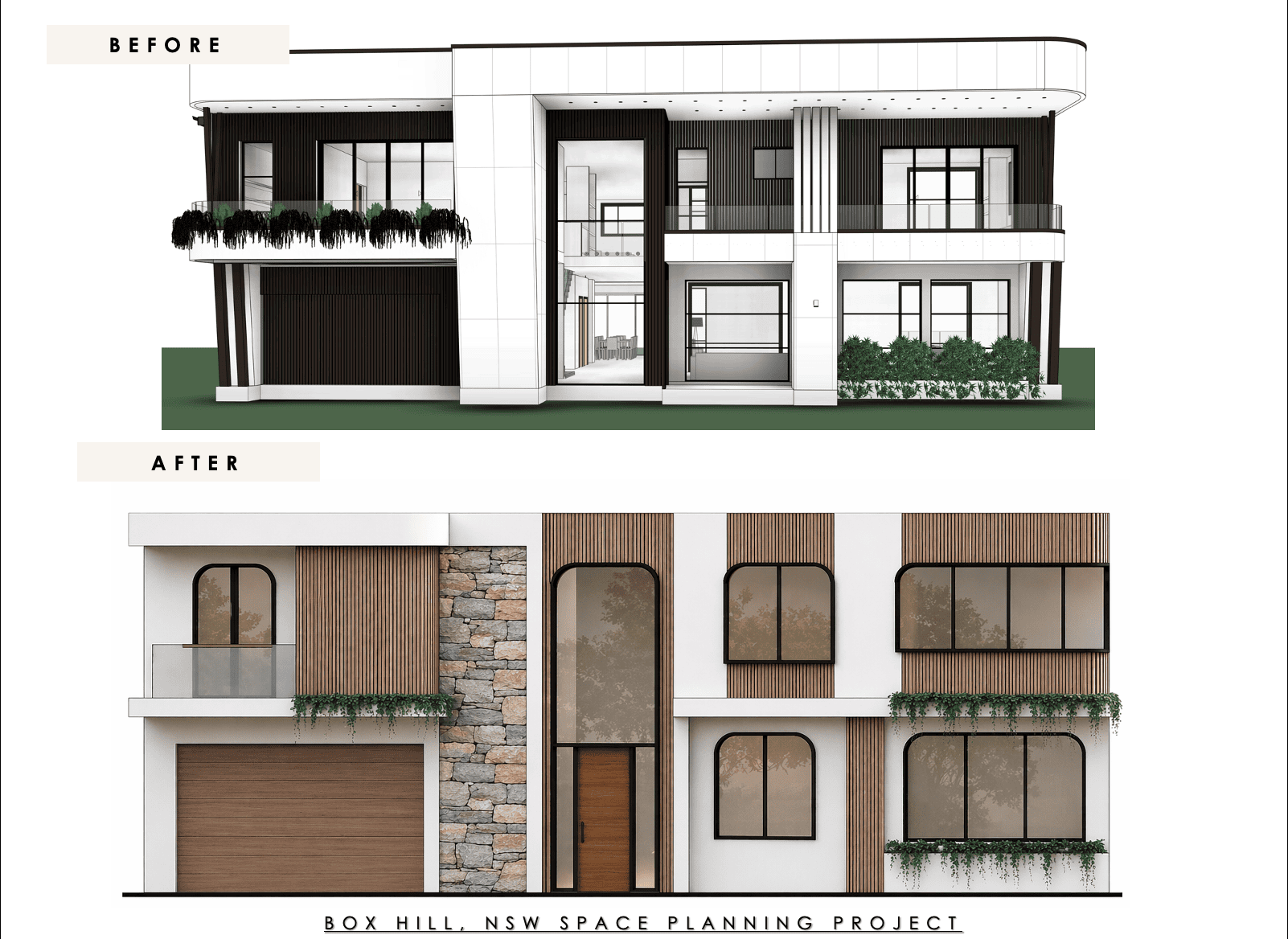
Of all the work I do during a floor plan review, getting the windows and doors right is where we usually see the biggest transformation. It affects how light moves through your home, how spaces feel to be in, and how well your furniture can actually work in each room. It’s also the hardest thing to change once your DA or CDC is approved – which is why I feel so strongly about catching it early.
I regularly see windows positioned without any real consideration of what’s happening inside that room – above a bed, interrupting a kitchen wall, or cutting across a space where you’d naturally want a sofa or TV cabinet. It looks fine on a plan. In real life, the blind goes down and stays down, your furniture options shrink, and you’re spending money trying to work around something that could have been a simple adjustment at this stage.
Moving and repositioning windows and doors to optimise aesthetics, flow and function (both inside and out) is where clients often tell me they had no idea how different it could feel. Even updating the window’s size or style can have a big impact.
That’s the kind of change that doesn’t always cost more to build. It just takes someone looking at the plan with fresh eyes before it’s locked in.
Bathroom and toilet positioning
Open the door and walk straight into the toilet. It’s more common than you’d think, and it’s a simple fix at plan stage. Much less simple – and much more expensive – once the plumbing is in.
Something I ask every client to do: walk through your floor plan mentally, room by room, door by door. Stand at the entry point. Open it. What do you see? Most people haven’t tried this, and it’s one of the most revealing things you can do before you commit.
Hallways with no flow
A long corridor with a row of doors and no natural light. It’s very common in project home designs and one of those things that’s hard to spot on a plan but immediately noticeable when you live with it. Often, the fix isn’t structural – it’s about reconsidering the sequence of spaces so the home feels like it moves, rather than just a series of rooms.
Master bedroom privacy
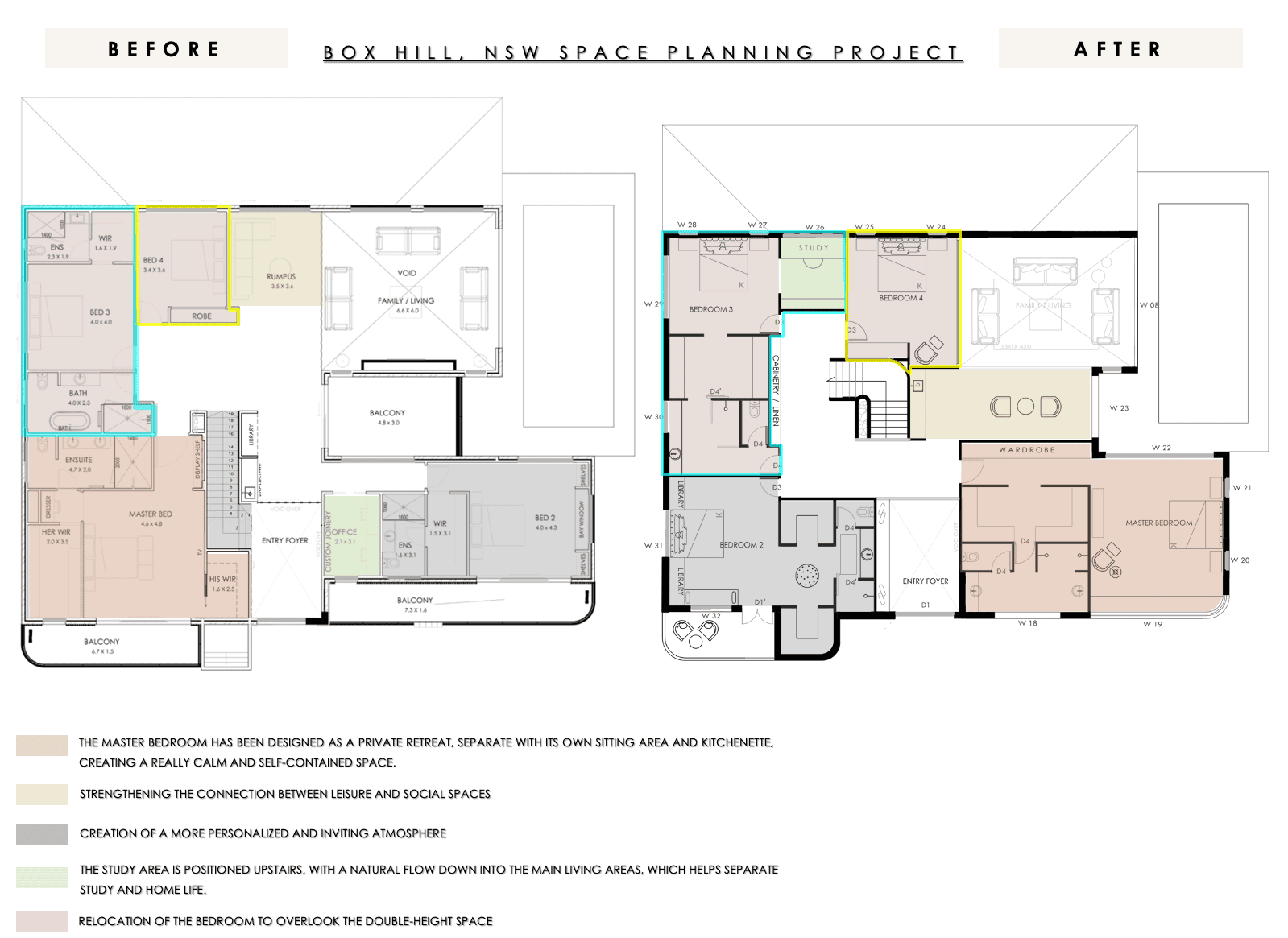
I often see upstairs layouts where the master bedroom opens directly across from the kids’ rooms or into a family zone with nothing in between. A small shift or wardrobe placement can create genuine separation and quiet – and it’s much harder to achieve once the walls are built.
Living areas that are too large to feel comfortable
A big, open living space sounds appealing, but without something to break it up – a fireplace, a change in ceiling height, or enough wall to anchor a sofa – it can feel unsettled, echoey, and difficult to furnish well.
What happens when you book a floor plan review service in Sydney or remotely
When you bring me your floor plan, whether you’ve come to me through a builder referral or found me searching for an interior designer for a new build, the first thing I want to understand is how you actually live day to day.
I ask questions that might surprise you. Who uses the front door, and who comes in through the garage? What does your morning routine look like? Do you work from home? If you cook together as a family, how does that actually work in a kitchen?
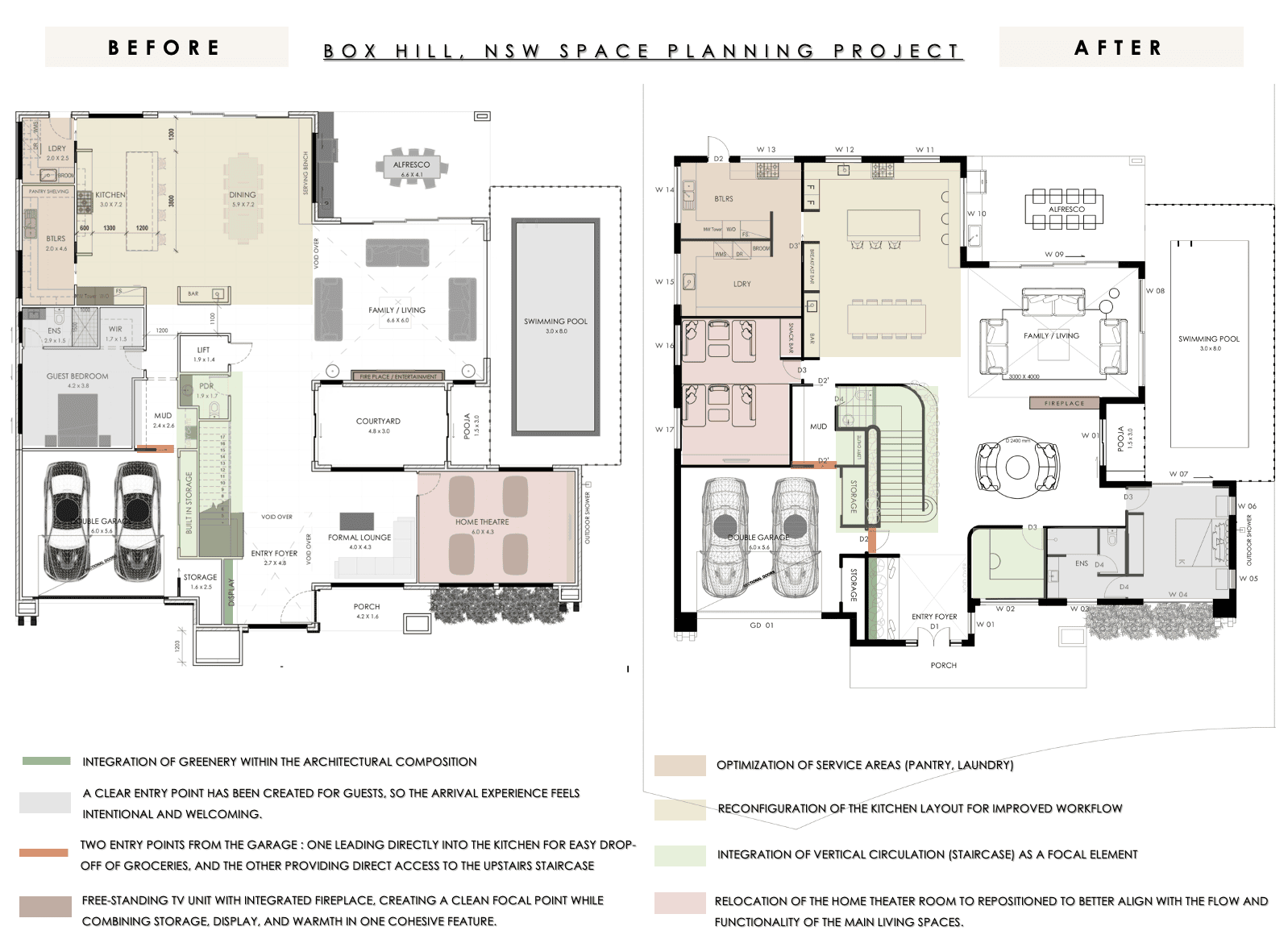
The answers shape everything. I’ve repositioned laundries so a tradie can come straight in from site, drop his gear and shower without tracking through the whole house. I’ve added a small kitchenette off a master bedroom for a client who likes to start her mornings quietly before joining the family. I’ve created two entry points from a garage – one straight to the kitchen for grocery runs, one straight upstairs.
None of these changes are dramatic. They’re thoughtful adjustments that make a real difference to how a home feels to live in.
From that first conversation – usually one to two hours – I develop up to six layout options for the same footprint, each one reflecting a different way of living in that space. We work through them together, find what resonates, and refine into a final layout. The whole process typically takes two to four weeks and gives you an improved floor plan layout that works for your family.
When’s the right time to book your floor plan review service?
The truth is, as soon as you receive it. If you’re wondering how to improve a floor plan before DA or CDC approval, the answer is always: get an independent set of eyes on it early.
The earlier we are in the process, the more flexibility we’ll have to make changes without major costs. Once your floor plan moves into DA or CDC approval, the process can become much harder and more expensive.
A floor plan review isn’t about finding fault. It’s about making subtle changes to make sure the home you’re about to build is one you’ll love coming back to every day.
Learn more about my space planning and floor plan review service, or get in touch and let’s chat through your options further.

Nancy Malekpour-Nisyrios
An award-winning interior designer, Nancy Malekpour-Nisyrios is the Founder and Lead Design Consultant at Design to Inspire. Formerly a senior interior designer for a leading NSW construction company, she’s completed over 100 display homes, winning multiple MBA Excellence in Housing and Housing Industry Association awards.

Meet The Designer
An award-winning interior designer, Nancy Malekpour-Nisyrios is the Founder and Lead Design Consultant at Design to Inspire. Formerly a senior interior designer for a leading NSW construction company, she’s completed over 100 display homes, winning multiple MBA Excellence in Housing and Housing Industry Association awards.